

Perhaps this is a fantasy. Perhaps this is the father as imagined, not as experienced. Perhaps this is what the students receive, and what the son never did. And so, the adult Adam forces the encounter, returns, confronts, expresses anger, and eventually allows the child within him to forgive the father for the ultimate abandonment: his death.
* * *
When a film is called The Adam Project, it sets up a certain expectation. Not just another action movie, not just another time-travel adventure, but something larger, something foundational. The name itself gestures toward Adam, the first man, the beginning of humanity, the origin point. It promises, almost inevitably, a story that reaches beyond the individual and into something universal. But all that for a movie that eventually was, mostly, forgotten quickly as yet another easy-to-digest action flick.
And yet what the film ultimately offers, for me, maybe only for me, is far more intimate and far more substantial. This is, unmistakably, a film about sons, about fathers and sons, about inheritance, absence, and the quiet persistence of grief across time.
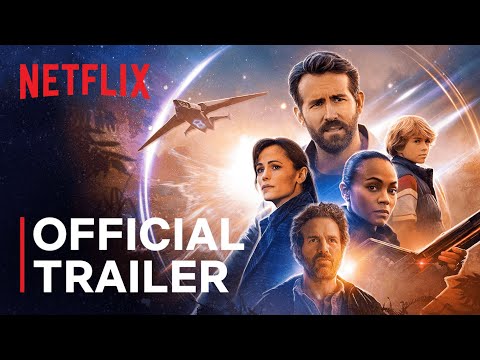
Beneath its polished action sequences and its light, often charming use of time travel, it is less a spectacle than an examination of relationships across generations – more specifically, between son and father, between son and mother, and most importantly, between the father a man becomes and the father he continues to carry within himself.
Despite its pretty great name, I did not expect to return to this film. It was released to lukewarm reviews, quickly absorbed into Netflix’s endless catalog, and just as quickly forgotten. And yet I found myself coming back to it – again and again, more often than I can quite explain.
The Adam Project is, of course, named after its protagonist, Adam. It is also the name his father gives to his greatest invention – time travel itself. And the resonance is difficult to ignore. Adam is not just a name; it is a symbol. In Hebrew, adam is not only the name of the first man but also the word for “a human being” – often male, but not exclusively so. The name stretches outward, encompassing not just one person but humanity as a whole. Naturally.
Past, present, and future thus converge into a well-crafted story of action, but whose emotional depth – such as it can be in a Ryan Reynolds vehicle – is rooted in something more familiar: a quiet, persistent pain. The pain we carry as fathers. The anxiety about the future we leave our children, the uncertainty of every decision we make in the present, and the guilt that lingers over how we have treated them.
Adam is not just the character played by Ryan Reynolds. He is also the boy, played by Walker Scobell, who remarkably manages to capture Reynolds’s cadence and presence in miniature. And yet, if we are honest, this film, and the Ryan Reynolds brand in general (out of Deadpool, obviously), is not really for children or even teens. My own children were thoroughly bored by it. I, on the other hand, found myself returning to it.


Because the adult Adam, as portrayed by Reynolds, is a man in his forties, something like us, like me. He is unshaven, imperfect, and occasionally awkward. Like us, like me. Like Reynolds’s carefully built persona. Even as he remains, of course, charismatic, luminous, the capable pilot and undeniable star. He exists in our present but speaks constantly with his past – with his mother, still grieving the loss of his father; with his father, haunted by the future he will leave behind; and with himself, split across time into both the boy he once was and the man he has become.
The boy, in many ways, is sharper – quicker to understand, less burdened, more direct. The adult, for all his confidence, carries the weight.
His father, played by Mark Ruffalo, is a brilliant scientist who openly embraces the identity of the “nerd.” But more than that, he is the absent father – absent not by choice but by death – and yet profoundly present as legacy. He leaves behind not only a son but a world reshaped by his invention. An invention that holds his son’s name, and a son who is deeply hurt that his father has left, and in his mind and memory, his father chose the other Adam, the Adam project, over his actual son.


So why return to a 2022 film like this? A Netflix collaboration between Reynolds and Shawn Levy – the duo behind the cultural phenomenon of Deadpool – that ultimately received lukewarm reviews and has, by now, largely faded from memory?
The prospect of this film is not that of the child discovering a vast and wondrous world, full of promise and danger – a familiar trope of 1980s and ’90s cinema. Instead, it is the perspective of the adult, who once was that child, and who must now return – not to discover but to repair. But now, like a common movie cliché, he is cynical; he is hurt. What will happen next?
On the level of plot, this means fixing time itself. A villain (Catherine Keener) travels back to 2018, alters the course of events, and creates a dystopian future through the misuse of Adam’s father’s invention. But the film is not particularly interested in that future. We do not really see it, because it does not matter. We have seen countless dystopias before – corporate dominance, environmental collapse, the erosion of human freedom. The specifics are irrelevant.
What matters is the present. And more precisely, the trauma that binds past and present together: the loss of a father, the distortion of time, and the damaged adulthood that emerges from both.
And here is the point at which the film becomes something else entirely.
The damaged adult – this man in his forties, carrying the weight of his father’s legacy, making mistakes, passing them on to the next generation – that is not just Adam. That is me. It is the condition of being a father, suspended between one’s own father and one’s children, carrying an inheritance while simultaneously creating one.
The film’s conclusion offers resolution, at least narratively. Time travel is undone. The villain is defeated – by her own hand, fittingly. Adam meets his future wife again. The younger Adam embraced his mother, giving her what she needed, and perhaps what he himself needed.
The future becomes possible again. Trauma loosens its grip. The adult Adam – this man in his forties – manages, at last, to communicate with himself.
The Face/Off Moment
When Adam’s father, played by Ruffalo, first appears, he does so not as a memory but as a living presence, lecturing in 2018, speaking to a room of students. He tells them that failure is inevitable, that no meaningful success comes without it. It is the kind of thing one wants to hear from a father, or from anyone who might stand for one: you are allowed to fail.
He goes further. “We are meant to work on problems that our children will solve.” And then, more bluntly: “You will die before your life’s work is done.”
And in the middle of that speech, almost absurdly, he notices a student’s shirt – Nicolas Cage’s face, mislabeled as John Travolta, a quiet nod to Face/Off. He pauses, points it out, and lets the room laugh. It is a small, almost ridiculous interruption, but it matters. In that moment, the father is not just a source of wisdom; he is attentive. He sees what his students see. He recognizes the trivial, the pop-cultural, the slightly stupid things that nonetheless matter to them. It feels, briefly, like recognition. Like being seen. Like, I’m being seen. But it cannot be that simple.


Perhaps this is a fantasy. Perhaps this is the father as imagined, not as experienced. Perhaps this is what the students receive, and what the son never did. And so, the adult Adam forces the encounter, returns, confronts, expresses anger, and eventually allows the child within him to forgive the father for the ultimate abandonment: his death.
And, you know, when the movie ends, interestingly, the father (Ruffalo, I love this movie, but I won’t remember any of the characters’ names, we all know they don’t matter at all) is dead. And the relief is a son (young Adam) hugging his mother, who is there for him and whom he loves, as he says more than once, “more than I know.”
But earlier, one scene before that one, even the son disappears, and the father remains. After biting the bad person in this movie, the father plays catch with his two future sons, the young and middle-aged Adam, and they all need this moment. Because for both of them, the father died and is gone, but here he is, with them to play catch one last time. And the moment ends as time returns to its course – adult Adam and the 12-year-old are gone; the moment has passed as if it didn’t happen, which, in the movie’s logic, it didn’t. Only we could see it. So, the father, Ruffalo, watches his two future sons disappearing, only he remains, to take care of his own real Adam and to, eventually, die and leave him alone.
Failing the Bechdel Test
There is a small moment in The Adam Project that could easily be overlooked. Nothing explodes, no timelines collapse, no emotional revelations are declared. A mother, played by Jennifer Garner, prepares breakfast.
It is as simple as it gets: cereal and milk. Not a cinematic breakfast of pancakes and carefully staged domestic perfection, but the kind most children actually grow up with. She pours the cereal into a bowl and, almost absentmindedly, places her other hand alongside the box, steadying it so it does not spill.
It is a small gesture. Almost nothing. And yet it is everything.


It is the kind of movement that comes from repetition, from care so deeply ingrained it no longer announces itself. The kind of gesture that holds together the everyday life of a family without ever being named as such. She feeds her husband and son, protects the bowl, and contains any potential mess before it happens. She is, at that moment, the quiet center of the household, sustaining it, stabilizing it, and, as is so often the case, doing so without recognition.
The film does not pause to underline this. It simply shows it, plainly, almost casually. And in doing so, it captures something rare: not the idealized image of motherhood but its ordinariness, its precision, its invisibility.
Yet this is unmistakably a film about sons. Women are present but largely as figures orbiting the central relationship: the wife (Zoe Saldana), the compassionate mother (Jennifer Garner), and the antagonistic figure (Catherine Keener). They have names, professions, and agencies, but the structure remains, for the most part, unmistakably familiar, even clichéd.
The critique is valid. The dichotomy between the nurturing mother and the ruthless, unattached career woman echoes patterns long identified – one might think of Adrienne Rich’s mother-and-Madonna analysis, and others who have traced these representations to exhaustion. Even the capable and courageous wife (Saldana) cannot fully compensate for this imbalance. By most measures, the film likely fails even the modest standards of the Bechdel Test.
All of this is true. It should not be ignored. And I know all that, you know, I do Yin yoga occasionally, when Sonia gives a class at my gym. I know. And yet that is precisely the point. This is, unmistakably, a film about sons.
The film is not for everyone. It is, quite specifically, for me. I am a son. I am a father. I have sons. It is not for them – they were bored. They don’t want to see Ryan Reynolds without his Deadpool mask. It is not for my wife, nor for my daughter. Obviously, my own parents would not care for it. And, you know, not just about that, but sometimes it feels like I’m the only one in this family who cares about the future of Star Trek.
So, really, it is, in a way, my small corner.
It is the place where a son, now in his forties, can, finally, angrily, ask his father, “Then why are you here?” and hear the answer: “Because you can’t do this without me.” And the son, even if he is Ryan Reynolds, for all his charisma and wit, falls silent. Because it is true, he cannot do it without his father. The real one, the imagined one, the one he carries within him.
To save the world, but more importantly, to hold together the fragile core of his own life.
Symbolically, middle-aged Adam (as he is actually being referred to in this movie), his younger self, and their father come together to put an end to the other Adam, the project, that threatens everything and everyone. The father chooses his son over his job. He is there to help, he is there to be yelled at, he is there. Remember, he will remain there when it is all over.
And Finally, Me
This film is a space where I can allow the pain of the past and the anxieties of the future to surface gently and safely, in the way that Shawn Levy and Ryan Reynolds know how to construct. It does not solve anything. It does not heal trauma or even pain. It does not improve my children’s lives. It is a corporate Netflix product, starring a millionaire actor and directed by a millionaire filmmaker.
I know that. Of course, I know that.
And yet.


I remain entangled in the endless complexity of life, its demands, its regrets, its uncertainties. I make mistakes at every step. I am often unshaven. I am often in pain. I miss my father, who is very much alive but far away. I look at my sons, at the reflection of myself in them, and wonder what I am leaving behind.
Somehow, this forgotten film from 2022 has become, for me, a quiet and comforting space.
Perhaps because, once – just once, watching it alone – it brought a tear to my eye. Not crying, not really. Just a tear. Well, a few, meaning several tears. After decades of dryness. Sitting alone, in front of a television screen, watching a forgotten Netflix product. You know, I can’t just call my father, tell him I miss him so much, and cry together on the phone. How do you even do something like that? How can I admit to myself that this is exactly what I want and need?
And that, in the end, is the point. Those tears. Which I’m not even sure I’m allowed to have. Because perhaps this – alone, in front of a screen, in front of a film, in front of a piece of forgotten corporate popular culture product – is the only place left for me to cry.
* * *
All images are screenshots from the film.

